
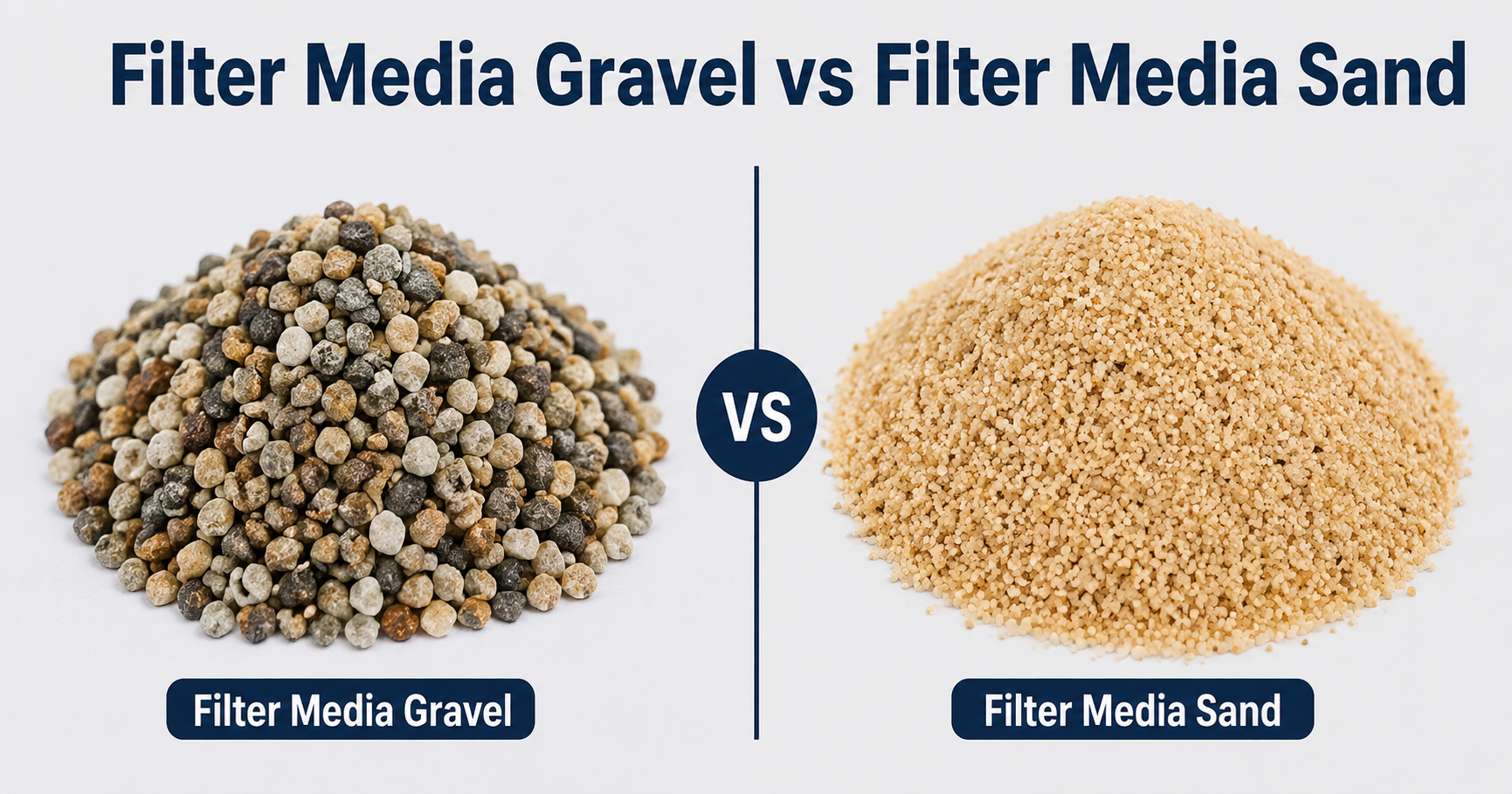
Filter Media Gravel vs Filter Media Sand: Uses, Benefits & Key Differences
Clean and efficient water filtration begins with selecting the right filtration media. Whether you're designing a new filtration system or upgrading an existing one, understanding filter media gravel vs filter media sand is essential for achieving optimal filtration performance and long-term reliability.
Although both materials are widely used in water filtration systems, they serve different purposes. Knowing their functions, benefits, and applications helps you choose the right combination for your filtration needs.
What Is Filter Media Gravel?
Filter media gravel is a naturally graded gravel used as the supporting layer in filtration systems. It is placed beneath the sand layer to provide structural support, improve water distribution, and protect the underdrain system from clogging.
High-quality products from reliable filter media gravel Manufacturers are manufactured with uniform particle sizes to ensure consistent filtration performance and durability. Gravel plays a crucial role in maintaining the stability and efficiency of the filtration bed.
Applications of Filter Media Gravel
- Municipal water treatment plants
- Industrial filtration systems
- Pressure sand filters
- Wastewater treatment plants
- Swimming pool filtration systems
- RO pre-treatment units
What Is Filter Media Sand?
Filter media sand is a specially graded filtration material designed to remove suspended solids, dirt, and fine particles from water. It acts as the primary filtration layer, allowing clean water to pass while trapping contaminants.
Many industries depend on trusted filter media sand suppliers to source premium-quality filtration sand that delivers reliable and consistent performance across different water treatment applications.
Applications of Filter Media Sand
- Drinking water treatment
- Industrial process water filtration
- Commercial filtration plants
- Irrigation systems
- Wastewater treatment
- Multi-grade filtration units
Filter Media Gravel vs Filter Media Sand: Key Differences
When comparing filter media gravel vs filter media sand, the main difference lies in the role each material performs within the filtration system.
Filter media gravel functions as the foundation of the filter bed. Its larger particle size provides support for the sand layer, ensures even water distribution, and prevents the filtration media from entering the drainage system.
Filter media sand, on the other hand, performs the actual filtration process. Its fine and uniformly graded particles effectively capture suspended solids, sediments, and other impurities, resulting in cleaner and safer water.
While gravel focuses on structural support and water flow, sand is responsible for contaminant removal. Instead of replacing one another, both materials work together to create an efficient filter media for water treatment system using high-quality water treatment filter media, capable of delivering consistent filtration performance.
Benefits of Filter Media Gravel
Filter media gravel offers several advantages that improve the overall efficiency of filtration systems, including:
- Provides strong support for the filtration bed
- Promotes uniform water flow distribution
- Protects the underdrain system
- Prevents clogging and media loss
- Offers excellent durability and long service life
- Reduces maintenance requirements
Benefits of Filter Media Sand
Filter media sand is one of the most widely used filtration materials because it provides numerous benefits, such as:
- Efficient removal of suspended solids
- Improved water clarity
- Consistent filtration performance
- Suitable for municipal, commercial, and industrial applications
- Easy maintenance and replacement
- Cost-effective filtration solution
As an effective water filtration media, high-quality filter sand helps maintain superior water quality while improving the efficiency of filtration systems.
How to Choose the Right Filtration Media
Choosing between Filter Gravel and Filter Sand depends on the purpose of your filtration system.
If you need structural support for the filter bed, proper drainage, and uniform water distribution, filter media gravel is the ideal choice.
If your objective is to remove suspended particles and improve water quality, filter media sand should be your primary filtration material.
In most modern filtration systems, both materials are used together because they complement each other. Understanding filter media gravel vs filter media sand allows plant operators, engineers, and businesses to design systems that provide maximum filtration efficiency and long-term operational reliability.
Conclusion
Understanding filter media gravel vs filter media sand is essential for building an efficient and durable filtration system. While filter media gravel provides structural support and promotes proper water flow, filter media sand performs the critical task of removing suspended impurities and improving water quality. Together, these materials create a highly effective filtration system that delivers reliable and consistent results.
If you're looking for high-quality filter media for water treatment, partnering with trusted manufacturers and suppliers ensures premium filtration media that enhances system performance, reduces maintenance costs, and supports long-term water treatment efficiency.
Frequently Asked Question
Q.1 What is the ideal filtration media combination for industrial water treatment systems?
The ideal combination typically includes a gravel support layer beneath a sand filtration layer. Gravel ensures proper water distribution and structural stability, while sand removes suspended particles, delivering efficient and consistent filtration performance.
Q.2 How often should filtration media be replaced in a water filtration system?
The replacement frequency depends on water quality, system usage, and maintenance practices. With regular backwashing and proper maintenance, filtration media can perform effectively for several years before requiring replacement.
Q.3 Why is particle size important when selecting filtration media?
Particle size directly affects filtration efficiency. Larger particles provide support and drainage, whereas finer particles capture suspended solids. Choosing the correct grading ensures better flow rates and effective contaminant removal.
Q.4 Can the same filtration media be used for drinking water and wastewater treatment?
Yes, similar filtration materials can be used in both applications, but the grade, size, and filtration design should be selected based on the specific water quality requirements and treatment objectives.
Q.5 What factors should be considered before choosing filtration materials for a treatment plant?
Important factors include water quality, filtration capacity, particle size distribution, chemical resistance, durability, maintenance requirements, and compliance with industry standards. Selecting high-quality filtration materials helps improve system efficiency and reduces long-term operating costs.